Recommended Resources
Helpful books, podcasts, interviews and articles on self directed/child-led learning as well as neurodiversity affirming practices.
(Still updating this section, we have so many recommendations and not enough time to post.)
Books

'If you are a parent worrying whether self-directed education will work for your child, because you have been told that they have special needs which can only be met in the school system - think again'
Neurodivergent children experience and interact with the world differently to many of their peers. Standard educational systems often fail to adapt to their unique strengths and ways of learning. School, and even the act of learning, can become a source of great anxiety and trauma. Self-directed education offers an alternative to traditional schools that can help neurodivergent children develop at their own pace and thrive.

Eliza Fricker gets it. Her compelling, hard-hitting and irreverently humorous illustrations follow a family through the early days of school avoidance, the process of accessing support and the challenges of coping in the meantime.
Can't Not Won't illuminates the absurdity and frustrations that often arise when dealing with health, social and educational systems, and will help any parent in the same boat feel seen.
This guide acts as a way to communicate these difficult circumstances with others.
Wonderfully relatable, the book also includes written guidance for parents and professionals on what works best when it comes to managing school avoidance.

A complete guide to a paradigm-shifting model of school discipline. Disruptive students need problem-solving skills, not punishment.
Traditional school discipline is ineffective and often damaging, relying heavily on punishments and motivational procedures aimed at giving students the incentive to behave better. There is a better way.
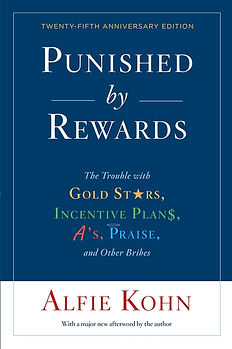
Revised for the twenty-fifth anniversary of its publication.
Drawing from hundreds of studies, Kohn demonstrates that we actually do inferior work when we are enticed with money, grades, or other incentives—and are apt to lose interest in whatever we were bribed to do.
Rewards and punishments are two sides of the same coin—and the coin doesn’t buy much. What is needed, Kohn explains, is an alternative to both ways of controlling people.

In Free to Learn, developmental psychologist Peter Gray argues that in order to foster children who will thrive in today's constantly changing world, we must entrust them to steer their own learning and development. A brave, counterintuitive proposal for freeing our children from the shackles of the curiosity-killing institution we call school, Free to Learn suggests that it's time to stop asking what's wrong with our children, and start asking what's wrong with the system.\
Podcast Episodes
Uniquely Human Podcast Episode 124
The Heart of Home Education Episode 101